Travel Guide · Starship Launch Corridor

How to get to a Starship launch.

Starbase sits at the bottom of Texas, past the last Buc-ee's, past the last reliable cell tower, at the end of a two-lane road that dead-ends at the Gulf of Mexico. Getting there takes planning. This guide covers every route in, every rental counter worth knowing, and how to build a trip that survives the scrub you should expect.

Chapter 01

Flying in.

Two airports serve the Rio Grande Valley. Both are small, both are manageable, and neither will feel like DFW. That's the point.

The Rio Grande Valley has two commercial airports within striking distance of Starbase: Brownsville South Padre Island International (BRO) and Valley International in Harlingen (HRL). They sit 25 miles apart on US-77, and your choice between them comes down to schedule availability, rental car inventory, and how much you enjoy small airports where the TSA line is six people deep.

Brownsville SPI International (BRO)

BRO is the closer airport—about 30 minutes from the Boca Chica viewing areas via TX-4. United operates service from Houston's George Bush Intercontinental (IAH), and American connects through Dallas/Fort Worth (DFW). Check current schedules for frequency, as both carriers adjust seasonally. The terminal is small, clean, and blissfully uncomplicated. You'll be at the rental counter within 10 minutes of deplaning.

The downside: limited flight frequency means limited flexibility. If your flight cancels on a launch morning, the next one might not arrive until the window has closed. BRO also tends to price higher per seat because the planes are smaller—regional jets, mostly CRJ-200s and ERJ-145s that seat 50. Fares from IAH typically run $180–$350 round-trip depending on how far out you book, though launch weekends push the upper end.

Valley International, Harlingen (HRL)

HRL sits about 45 minutes from Boca Chica but generally offers more daily departures and slightly better fares. United, American, and Sun Country all serve HRL, with connections through IAH, DFW, and Minneapolis-Saint Paul (MSP) respectively. The extra 15 minutes of drive time buys you more schedule options and, in our experience, better rental car availability on high-demand weekends.

If you're booking on short notice because a launch window just opened, HRL usually has more inventory. It's also the better bet if you're arriving late the night before—more flights means more evening arrivals.

Which one?

Book BRO if the schedule works and you want to minimize drive time. Book HRL if you want more flight options or if BRO is sold out. Either way, you'll be on the road to Boca Chica within the hour.

For international visitors

Neither BRO nor HRL has international customs facilities you'd want to rely on for connections. Fly into DFW or IAH first, clear customs there, then connect on a domestic flight down to the Valley. IAH is the more natural hub—United's Houston operation is enormous, and you can clear Global Entry, grab a torta at Hugo's outpost in Terminal C, and catch the next puddle jumper south. DFW works equally well if you're on American or coming through on a oneworld partner. Austin-Bergstrom (AUS) is also an option; Frontier and other low-cost carriers fly AUS to HRL seasonally, though schedules are thin. Check current routes before building a plan around it.

Driving in Texas: International visitors can rent and drive with a valid foreign license, but carrying an International Driving Permit (IDP) alongside your home-country license is recommended—rental agencies and law enforcement recognize it immediately. Obtain an IDP from your national automobile association before you travel; they're not available at the border.

Airport

BRO — Brownsville

30 min to Boca Chica

Closer to the pad. Smaller terminal. United from IAH, American from DFW. Limited daily frequency—fewer safety nets if a flight cancels. Rental counters in the terminal.

Airport

HRL — Harlingen

45 min to Boca Chica

More daily flights, more carriers (United, American, Sun Country). Better rental car inventory on launch weekends. Worth the extra 15 minutes of driving for the scheduling flexibility.

Chapter 02

Driving in.

Texas is enormous. The Valley is the farthest corner from everywhere. Plan your fuel stops and your patience.

Driving to Brownsville is a commitment, but people do it constantly—especially from Houston, San Antonio, and Austin. The roads are good, the speed limits are generous (75 mph on most of US-77), and the landscape empties out south of Kingsville into the kind of flat, open ranchland that makes you understand why Texas built its own power grid.

From Houston: ~5.5 hours, 350 miles

Take US-77 south out of Victoria. This is the most popular route and the most straightforward. Stop for gas and a bathroom in Kingsville or Raymondville—the stretch between Riviera and the Valley is sparse. You'll pass through the Border Patrol checkpoint near Sarita; have your ID ready and don't overthink it. The checkpoint adds five minutes on a good day, 20 on a bad one. Buc-ee's in Luling or the one in Texas City are your last outposts of organized civilization with clean restrooms and 47 varieties of jerky.

From San Antonio: ~5 hours, 280 miles

I-37 south to Corpus Christi, then US-77 the rest of the way. The San Antonio-to-Corpus leg moves fast (two hours, easy). South of Corpus is where the clock slows down. Same Kingsville gas stop advice applies. If you're leaving San Antonio on a Friday afternoon, add 45 minutes for I-37 traffic through the south side.

From Austin: ~5.5 hours, 330 miles

I-35 south to San Antonio, then I-37 to Corpus, then US-77 south. Or take TX-130 toll road to skip Austin-to-San Antonio congestion, which is worth the $5–$8 in tolls every time. You're essentially doing the San Antonio route with an extra hour bolted on the front.

From Dallas/Fort Worth: ~8 hours, 530 miles

This is the drive that separates the committed from the curious. I-35 south through Waco and Austin to San Antonio, then the same I-37/US-77 route. Eight hours in a car is no joke, and you'll want an overnight split in San Antonio or Corpus if you're not a road warrior. Leave DFW by 6 a.m. and you'll roll into Brownsville by mid-afternoon. Alternatively, just fly—American and United both have DFW-to-BRO and DFW-to-HRL routes, and you'll spend less time in transit than you will on I-35.

From McAllen: ~1.5 hours, 60 miles

The easy one. US-83 east to US-77 south, or take the expressway through Harlingen. McAllen is the Valley's largest city, and plenty of launch watchers base out of there—especially if Brownsville hotels are full. Restaurants are better in McAllen anyway.

The final stretch: TX-4 to Boca Chica

Once you're in Brownsville, the drive to Boca Chica Beach is about 25 miles east on TX-4 (also called Boca Chica Boulevard). This is a two-lane road through flat marshland with no services, no gas stations, and no cell signal for the last several miles. Fill your tank before you leave Brownsville. Bring water. The road is paved and in good shape, but there's nowhere to stop once you pass the SpaceX security gate. On launch days, TX-4 gets closed east of FM-1419, so you'll need to check Cameron County's closure notices before heading out. More on that in our viewing guide.

An open highway stretching toward the horizon through flat Texas ranchland — the drive south to the Valley
The drive south through Texas ranchland — US-77 empties out past Kingsville and doesn't fill back up until the Valley. GulfToOrbit

"Fill your tank in Brownsville. There is nothing between the city and the beach except SpaceX, salt flats, and the cell signal dying."

— Advice we give every visitor
Chapter 03

Rent a car.

This is not optional. There is no Uber at Boca Chica. There is no Lyft. There is barely a road.

Let us be direct: you need a rental car. The launch viewing areas have zero rideshare coverage. No shuttle, no bus, no taxi stand. Boca Chica Beach is 25 miles from Brownsville down a road with no services. Even if you somehow got an Uber to drop you there, you'd have no way back if the driver doesn't want to wait through a six-hour scrub delay in a dead zone.

Where to rent

Both BRO and HRL have on-site rental counters. Enterprise, Hertz, and National are reliably available at both airports. Budget and Avis rotate in depending on the season. HRL generally has deeper inventory because it's the larger operation. There are also off-airport locations along US-77 in Brownsville and Harlingen if the airport counters are sold out.

Book early

When a launch window gets confirmed, rental cars at BRO disappear within 48 hours. This is not an exaggeration. The Valley's rental fleets are small, and a Starship launch pulls thousands of people into a metro area of 200,000. We've seen BRO go to zero available vehicles on launch weekends. Book the moment you know your travel dates, even if the launch hasn't been confirmed yet—most rentals are free cancellation.

Expect to pay $40–$80 per day for a compact or midsize. Launch weekends push that to $60–$120. If you're flexible on vehicle class, book whatever's available. Nobody cares what you drove to the beach.

What you need in a car

Nothing special. The roads to all viewing spots are paved. You don't need a 4x4 or a truck. A basic sedan handles everything. The one thing we'd note: if you're planning to park on Boca Chica Beach itself, the sand near the access point is compact enough for a regular car in dry conditions. After rain, stick to the road shoulder. We've watched enough tourists get stuck in wet sand to beg you: don't be the person blocking the access road during a launch window.

Gas

Fill up in Brownsville. The last reliable stations are on International Boulevard and on Boca Chica Boulevard near the H-E-B. There is nothing on TX-4 once you leave the city. You'll burn roughly a quarter tank on the round-trip to Boca Chica and back, more if you idle the AC during a long hold. Keep it above half.

Chapter 04

Timing your trip.

SpaceX does not launch on a calendar. They launch when the vehicle is ready and the FAA says go. Your job is to build a trip that absorbs the uncertainty.

This is the part where most first-timers get it wrong. They see a launch date on Twitter, book a flight for that day, and then act surprised when it scrubs. Here's the reality: the first attempt fails roughly half the time. Weather, hardware, range issues, FAA holds—there are a dozen reasons a launch slips, and none of them care about your return flight.

How to track launch windows

Three sources, in order of reliability:

1. Cameron County closure notices. When Cameron County issues a road closure order for TX-4, a launch is genuinely imminent. These notices typically come 48–72 hours before the window opens and include primary and backup dates. The county posts them on their official website and social media. This is the most reliable signal that hardware is ready.

2. SpaceX's official X (Twitter) account. @SpaceX posts launch updates, but they tend to confirm rather than predict. By the time SpaceX tweets a target date, it's usually real—but the time between "target" and "confirmed" can shift by days.

3. NASASpaceflight (NSF) and other community trackers. NSF's forum and X account aggregate FAA filings, TFR (Temporary Flight Restriction) notices, and on-the-ground reports from locals who watch the pad daily. These sources often have a launch date narrowed down before SpaceX announces it publicly. They're not official, but they're well-sourced.

The booking window

Here's our tested approach: book flights and a hotel the moment Cameron County issues a closure notice, targeting the first listed date. Book refundable fares or use airline credits. Reserve a rental car immediately—remember, inventory vanishes fast. Plan to arrive the day before the first closure date and leave two to three days after.

If you have the flexibility, book three to five days total. This gives you the best chance of catching the launch even after one or two scrubs, and it gives you time to actually enjoy the Valley—which, despite what the space tourism crowd thinks, is the real reason to come down here.

Time of year matters

SpaceX launches year-round, but weather patterns affect scheduling. Summer means afternoon thunderstorms that can push a window. Winter is drier but occasionally brings cold fronts with high winds. Spring and fall tend to have the mildest conditions. That said, SpaceX has launched in every season, and predicting a specific day's weather more than 48 hours out is a coin flip.

One practical note: summer in the Valley is hot. Triple digits, full humidity, no shade at most viewing areas. If your launch window falls in July or August, read our guide to what to bring and pack accordingly. Dehydration at Boca Chica is a real problem we've watched happen.

"Book three to five days. The launch will happen when it happens. The rest of the time, you're on vacation in the most underrated corner of Texas."

— How we plan every visit
Chapter 05

When it scrubs.

It will scrub. The question is what you do with the gift of an unexpected free day in the Rio Grande Valley.

Scrubs are not failures. They're the system working correctly—something wasn't right, and they stopped. It means the next attempt is more likely to succeed. But standing on a beach for four hours in the heat only to watch nothing happen can test anyone's patience, so here's the move: treat the scrub day as the bonus you didn't know you wanted.

Go to the beach

South Padre Island is 30 minutes from Brownsville across the Queen Isabella Causeway. The beach is wide, the water is warm from April through October, and the vibe is relaxed outside of spring break season. Grab a chair at a beach bar, watch the pelicans work the surf line, and remind yourself that you're at the beach in South Texas while your coworkers are in a conference room.

Eat your way through Brownsville

The food in the Valley is legitimately some of the best in Texas, and Texas does not lack for good food. Breakfast tacos that would start a fistfight in Austin. Birria that's been slow-cooked since 3 a.m. Seafood from the Gulf that was swimming six hours ago. We wrote an entire guide to the RGV food scene—use the scrub day to eat through it.

Go birding

The Valley is one of the top birding destinations in North America, and most space tourists have no idea. Laguna Atascosa National Wildlife Refuge sits between Brownsville and Harlingen and is home to ocelots, aplomado falcons, and hundreds of species that don't exist anywhere else in the United States. The World Birding Center network has nine sites across the Valley. Even if you've never picked up binoculars, an hour at Laguna Atascosa in the morning light will change your mind about what "wildlife" means in Texas. Our things-to-do guide has the full breakdown.

Go fishing

The Laguna Madre—the shallow bay between South Padre Island and the mainland—is one of the best sight-casting fisheries on the planet. Redfish, speckled trout, and flounder in knee-deep water so clear you can count their spots. Charter captains run half-day trips out of Port Isabel and SPI for $350–$500 for two anglers. Even if you don't catch anything, wading the flats with a guide who's been working these waters for 30 years is worth the price of admission.

Drive the corridor

Drive the length of TX-4 when it's open and get a feel for the landscape—salt flats, tidal marshes, the occasional rocket part being trucked down the road. Visit Port Isabel's lighthouse. Walk the Brownsville historic district. Take the drive up to Laguna Vista and Los Fresnos for a sense of what the towns near Starbase actually look like. Our weekend guide has a full list of what's worth your time.

Chapter 06

The 3-day itinerary.

The minimum viable launch trip. Arrive the day before, launch day, one buffer day. This works if the first attempt goes.

Day 1: Arrive and orient

Fly into BRO or HRL. Pick up your rental car. Drive to your hotel—see our lodging guide for where to base yourself. In the afternoon, do a dry run of the route to Boca Chica: drive TX-4 east from Brownsville, note where the SpaceX gate is, see the Starship stack if it's on the pad, and scout your viewing spot. This is also when you should check your cell signal situation, because you won't have time to troubleshoot it on launch morning.

Evening: eat a real dinner in Brownsville. You're going to be running on adrenaline and granola bars tomorrow. Get a proper meal—birria, carne asada, or Gulf shrimp. Set your alarm. Charge everything.

Day 2: Launch day

Wake up early. If the window opens at 7 a.m., you want to be on TX-4 by 5 a.m. to secure your spot before the road closes. Bring everything you need for the day: water (at least a gallon per person), food, sunscreen, hearing protection, a portable phone charger, and a chair. Read what to bring for the full checklist.

If it launches: congratulations. You just saw the largest rocket ever built leave the planet. The sound takes 25 seconds to reach you from five miles away. Your chest vibrates. You'll remember it for the rest of your life. Drive back to Brownsville, eat tacos, and sleep like a rock.

If it scrubs: the road reopens one to two hours after the call. Drive back, have lunch, hit South Padre Island for the afternoon. Check Cameron County for the next closure date—it's usually the next day or the day after.

Day 3: Buffer or departure

If the launch went on Day 2, this is your departure day. Sleep in, get breakfast tacos, drive to the airport. If it scrubbed and a second attempt is scheduled for today, repeat the Day 2 protocol. If no second attempt is scheduled within your window, you head home with a scrub story and a reason to come back. Welcome to the club—most regulars didn't see a launch on their first try either.

Chapter 07

The 5-day itinerary.

The version we actually recommend. Two scrub buffers, plus time to experience the Valley as more than a launchpad parking lot.

Day 1: Arrive and scout

Same as the three-day plan. Fly in, pick up the car, dry-run the route. But instead of a quick dinner, spend the evening on South Padre Island. Walk the jetties at sunset, eat grilled fish at one of the waterfront spots, and get a feel for the place. The Island at dusk, with the Starship stack visible across the water to the south, is something no other vacation destination on earth can offer.

Day 2: Pre-launch exploration

If the launch is tomorrow, use today to go slow. Morning birding at Laguna Atascosa—the refuge opens at sunrise and the first two hours are the best. Pack binoculars; you can borrow a pair at the visitor center if you didn't bring your own. Afternoon: drive through Los Fresnos and Laguna Vista, the small towns that SpaceX has transformed. Grab lunch at one of the taco trucks in Brownsville's Southmost neighborhood—the ones that locals actually use, not the ones on Google's front page.

Evening: prep your launch day kit. Charge devices. Fill the cooler with ice, water, and food. Set the alarm.

Day 3: Launch attempt one

Full launch day protocol. Leave early, claim your spot, wait. If it goes—wonderful. You have two more days to celebrate and explore. If it scrubs, you've got room to absorb it. Head to SPI for the afternoon, or drive to Port Isabel and climb the lighthouse for 360-degree views of the Laguna Madre. Check closure notices for the next attempt.

Day 4: Launch attempt two or Valley day

If the launch went on Day 3, today is yours. Options: half-day fishing charter out of Port Isabel. A food tour of Brownsville—start with barbacoa at a Brownsville taqueria, lunch at a mariscos spot, and an afternoon horchata. Drive up to the Santa Ana National Wildlife Refuge near McAllen if you want to see a completely different ecosystem (subtropical forest instead of coastal scrub). Or just beach. Nobody's judging.

If the launch didn't go on Day 3 and a second attempt is today, repeat the protocol. The second attempt has better odds—whatever caused the first scrub has usually been resolved. In our experience, if you've budgeted two attempts, you'll see a launch more than 75% of the time.

Day 5: Departure

Morning: breakfast tacos one last time. Swing by the Brownsville Historic Battlefield if you haven't yet—the site of the first battle of the Mexican-American War, and the kind of history lesson that doesn't exist anywhere else. Return the rental car, fly home. Start planning the next trip. They all do.

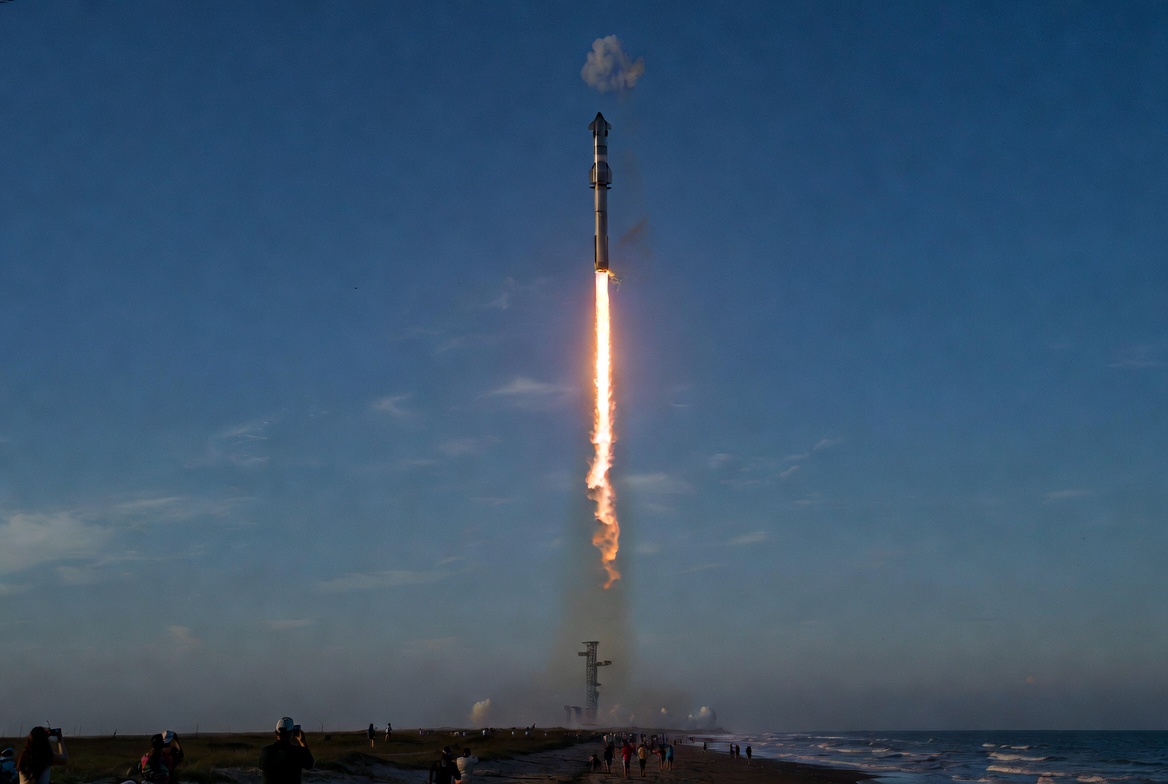
Starship SN8 launch as viewed from South Padre Island — the reward at the end of the journey
Starship SN8 launch from South Padre Island — this is what the trip is for. GulfToOrbit

"Everyone comes for the rocket. Everyone comes back for the Valley."

— Something we keep hearing
Chapter 08

Budget breakdown.

What a Starship launch trip actually costs, broken down by category. All figures are per person for a solo traveler; couples and groups will split lodging and car costs.

Launch tourism doesn't have to be expensive. The Valley is one of the most affordable metro areas in Texas, and your biggest cost is getting there. Here's a realistic breakdown for a three-night trip:

Flights: $180–$400 round-trip

From Texas hubs (IAH, DFW, AUS), expect $180–$300 round-trip into BRO or HRL if you book two to three weeks out. From further afield (LA, NYC, Chicago), you're looking at $300–$500 with a connection through IAH or DFW. Launch weekends push fares toward the top of those ranges. Southwest doesn't serve BRO or HRL, so you're on United, American, or Sun Country. Use Google Flights or the airline apps to set alerts. Book refundable or buy trip insurance—scrubs can push your departure date, and you want flexibility.

Hotel: $80–$180 per night

Brownsville has a solid range of chain hotels in the $80–$120/night range—Hampton Inn, Holiday Inn Express, Residence Inn. South Padre Island runs higher ($120–$250/night) but puts you on the beach with a view of the pad. Port Isabel is the budget move at $70–$110/night with a quieter vibe and easy access to both SPI and Boca Chica. For three nights, budget $300–$550 for lodging. See our full lodging guide for specific recommendations.

Rental car: $40–$80 per day

Three days of rental runs $120–$240, plus gas. Budget $30–$40 for fuel over a three-day trip. You'll burn most of it on the Brownsville-to-Boca Chica round-trips. Launch weekends can push daily rates to $80–$120 if inventory is tight, so book early.

Food: $30–$60 per day

The Valley is cheap to eat well. Breakfast tacos: $2–$4 each, and two is a meal. Lunch at a taqueria or mariscos spot: $10–$18. Dinner at a sit-down restaurant: $15–$30. You can eat like a king on $40/day. Budget $90–$180 for three days, more if you're doing SPI restaurant dinners.

Activities: $0–$150

Watching the launch is free. Boca Chica Beach is free. Isla Blanca Park on SPI charges $10 for parking. Laguna Atascosa refuge entry is $5 per vehicle. A fishing charter is the big splurge at $350–$500 for two anglers. If you skip the charter, activities for the whole trip come in under $50.

Total: 3-night trip

Budget traveler (driving from Houston, chain hotel, taco-heavy diet): $400–$600

Mid-range traveler (flying from a Texas hub, good hotel, mix of meals): $800–$1,200

Comfortable traveler (flying from out of state, SPI hotel, fishing charter, nice dinners): $1,500–$2,200

These are per-person numbers. Couples sharing a car and room will save 20–30% each. A group of four in two hotel rooms with a shared rental car is the most efficient configuration we've seen.

Chapter 09

Putting it together.

The tactical summary. Bookmark this section and come back when you're ready to book.

The 10-step booking sequence

1. Follow @SpaceX on X and bookmark NSF's Starship page. Set up alerts.

2. When Cameron County issues a road closure notice, move. This is your go signal.

3. Book flights into BRO or HRL. Refundable fares if possible.

4. Book a rental car immediately. Not tomorrow. Now.

5. Book a hotel in Brownsville, Port Isabel, or SPI for the closure dates plus two buffer days.

6. Read our viewing guide and pick your primary and backup viewing spots.

7. Read what to bring and start packing. Hearing protection is non-negotiable.

8. Check cell signal conditions and download offline maps of the area.

9. Build a scrub-day plan using our launch weekend planner. You'll thank yourself later.

10. Arrive the day before. Scout the route. Eat well. Sleep. Go see a rocket.

What most people get wrong

They book too tight. A single overnight for a launch attempt is setting yourself up for disappointment. The people who love their launch trips are the ones who built in slack—who treated the launch as the centerpiece of a Valley vacation, not the entirety of it.

They skip the rental car. We cannot stress this enough. There is no rideshare, no shuttle, no public transit to Boca Chica. A rental car is as essential as your plane ticket.

They don't bring enough water. A gallon per person per day at the viewing site is not overkill. It's the minimum. South Texas sun at sea level with no shade is not a theoretical risk—it's what every launch day feels like from March through November.

They underestimate the food. The biggest surprise for most visitors isn't the rocket. It's the birria. The ceviche. The barbacoa. The breakfast tacos that cost $2.50 and ruin every taco they eat back home. The Valley's food scene is deep, authentic, and completely under-covered by the national press. Don't spend your entire trip eating hotel breakfast. Get out and eat where locals eat.

A Starship launch is one of the few things left that genuinely defies description. The ground shakes. The sound arrives late and hits you in the sternum. The column of fire is five stories tall and climbing. Thousands of people who came from all over the world stand together on a beach in South Texas and watch something leave the planet.

Getting there takes effort. The Valley is remote by design—it's what made it the right place to build the world's largest rocket. But the remoteness is also what makes the trip worth it. You'll drive through ranchland that stretches to the horizon. You'll eat food that people in Manhattan would kill for and pay a tenth of the price. You'll see birds that exist nowhere else in the country. And if the timing works, you'll watch a 400-foot rocket light 33 engines and punch through the sky.

Plan the trip. Build in buffer days. Rent the car. Bring the water. And when the countdown hits zero, put the phone down for five seconds and just feel it.

We'll see you out there.

Weekly dispatch from the corridor

Free. Short. No spam.